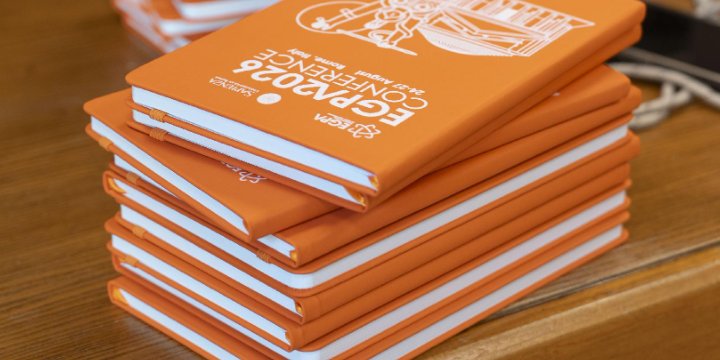
Trans-European Dialogue 2027

New Book Release: IIAS Public Governance Series Volume 6 Explores GIFT-MENA Network and Regional Governance Challenges

Diogo Pereira,

The 6th Volume of the IIAS Public Governance Series, titled Governance Cooperation in a Conflict-Ridden Context: The Case of the GIFT-MENA Network, offers an in-depth institutional analysis of the GIFT-MENA network and its efforts to foster regional cooperation in governance and public financial management in the Middle East and North Africa (MENA) region. Authored by Lamia El Moubayed Bissat, Sabine Hatem Khalil, and Carl Rihan, and prefaced by Michiel S. de Vries, the book examines the complex challenges faced by the network in its attempt to build a sustainable platform for South-South cooperation amidst a volatile geopolitical landscape.

The book delves into the early years of the GIFT-MENA network, exploring its ambitious goals of state modernization and good governance through collaborative training, research, and technical assistance. These efforts were heavily dependent on donor financing, and the volume highlights the successes of the network in creating a community of practice across MENA’s public sector institutions.

Additionally, the book's later chapters address the impact of the Arab Spring and its aftermath, exploring how shifts in donor priorities and the political instability of the region led to a standstill in the network's operations. The authors provide valuable recommendations for future pan-Arab initiatives, stressing the need for resilience and adaptability in designing governance networks that can navigate periods of crisis and change.

This volume offers an essential resource for policymakers, public service leaders, and academics interested in the dynamics of regional cooperation in the MENA region and beyond, providing key lessons for future governance initiatives in fragile and conflict-affected contexts.

The e-book is available for free at the link below, and the paperback version can be purchased via Amazon.

Resources

Public administration and management research has long drawn most of its ideas from Western, industrialised democracies. Yet Asia and the Global South have become major sites of administrative change, with large-scale reforms, fast-moving technology and some of the most inventive experiments in governance. Research from these regions has grown accordingly, but it is still often used to illustrate or apply theories made elsewhere, rather than to produce new ones.

This special issue of Public Management Review aims to change that. It invites authors to treat practice in Asia and the Global South as a starting point for theory: to test, question or extend established approaches, and to propose new concepts and explanations. It does not look for a single theory of these regions, which are far too diverse for that, but for context-sensitive contributions that also say something useful for policy and practice.
ASPA and EGPA call for papers | New Orleans, April 12-13, 2027 | Deadline: November 30, 2026

As democratic institutions face mounting pressure worldwide, public administrators are increasingly asked to spell out the role of their field in protecting and improving democratic systems. The American Society for Public Administration (ASPA) and the European Group for Public Administration (EGPA) are responding with the 2027 Transatlantic Dialogue (TAD), held alongside ASPA’s Annual Conference.

The theme is The Role of Public Policy and Administration in Shaping Democracy and Promoting the Resilience of Democratic Norms and Institutions.

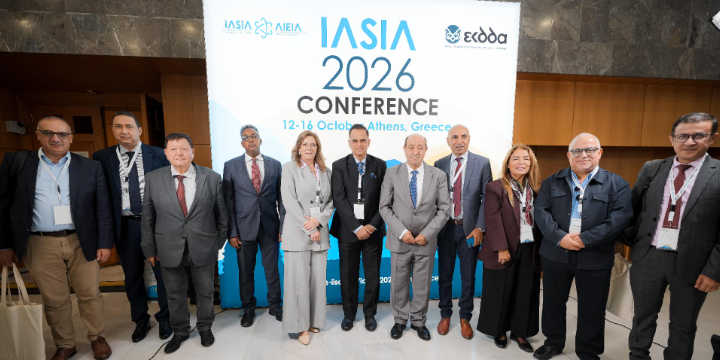
From 12 to 16 October 2026, the International Association of Schools and Institutes of Administration (IASIA) held its Annual Conference in Athens, hosted by EKDDA, the National Centre for Public Administration and Local Government. Under the theme “Rethinking Governance for a Changing World”, the conference gathered 400 delegates from 57 countries and marked the 65th anniversary of the association. Athens was a conference grounded by learning and history but also new projects and connexions.

Modify cookies