Dear colleagues and friends,
As the Steering Committee of the European Group for Public Administration (EGPA), we are deeply honored to serve this remarkable community - a longstanding cornerstone of public administration scholarship and practice across Europe and beyond.
We stand at a pivotal moment. Recent challenges have tested our cohesion, yet they also offer a unique opportunity to renew, modernize, and strengthen EGPA within the broader IIAS family. In an era marked by polarization and uncertainty, EGPA’s strong anchoring in the global public administration community remains one of its greatest assets. We must resist any tendency toward academic isolation in Europe, especially now, when the need for globally oriented, comparative research and cross-cultural collaboration has never been greater.
EGPA has long thrived on its intellectual autonomy, pioneering innovation through its Permanent Study Groups (PSGs)- dynamic platforms that shape research agendas and foster consortia capable of mobilizing European and international funding. EGPA stands as a distinctive and competitive learned society - one well worth preserving. Yet, to secure its future, substantial reform is essential. Over recent weeks, we have been preparing a reform package that we wish to advance in a spirit of cooperation, not confrontation, with the wider IIAS community.
The renewed partnership with IIAS
We are pleased to announce a renewed partnership with IIAS leadership that will ensure greater governance autonomy, financial transparency, and clearer statutes for EGPA. A dedicated Finance and Statute Task Force - including Reto Steiner, Marco Meneguzzo (EGPA Vice Presidents), Jörg Bogumil (Chair of the IIAS Finance Committee), Andreas Bergmann (Member of the IIAS CoA) and supported by Presidents Sabine Kuhlmann (EGPA) and Voruganti Srinivas (IIAS) - is developing financial reforms to strengthen EGPA’s financial base and accountability, while ensuring a fairer distribution of conference revenues in favor of local organizers. Measures will include reduced conference fees (through new tiered models) and the introduction of travel grants to make participation more accessible and inclusive.
The reform of the statutes and the secretariat services
This joint EGPA-IIAS team is also working toward a comprehensive reform of the statutes, to be completed by the EGPA Conference in Rome (24-27 August 2026). The goal is to enhance EGPA’s statutory rights, strengthen its functional autonomy, and establish its legal status within IIAS - drawing on best practices (e.g. ASPA “Chapter model”). Administrative services provided by the Brussels Secretariat will also be significantly improved - guided by principles of professionalism, respectful dialogue, and service orientation. Under the leadership of the new IIAS President Srinivas, the Secretariat will be restructured in terms of personnel and processes over the next year, including (but not limited to) a new EGPA Manager to be appointed by the end of this year.
The new Permanent Study Groups
Our annual conferences - the lifeblood of EGPA - will be revitalized through innovative, more open and flexible formats. Several new PSGs have been proposed or are in preparation and will hold their founding meetings in Rome, with the following provisional titles:
1. Public Marketing and Communication
2. AI in Government and Administration
3. Accounting, Finance, and Accountability
4. Impact Evaluation
5. Risk Management
6. Public Institutions, Public-Private Partnerships, and NGOs
7. Migration and Integration
8. Political and Administrative History
Alongside PSGs, which remain the backbone of EGPA, we will introduce new formats, with open calls launching in October:
· Specialized Panels, dedicated to specific topics or projects
· Ad Hoc Groups, to be established for one or two years
These formats will foster flexibility, openness, and faster integration of emerging themes, offering platforms for research consortia, project presentations, and cross-PSG collaboration.
Publications, dialogues and new collaborations
Access to high-quality publications will be further enhanced through IRAS (including regular Special Panels at our annual conferences and opportunities for participation in IRAS Special Issues), as well as Editors’ Panels. Additional transregional dialogues and special panels are planned for Rome and future conferences, in cooperation with ASPA (TAD), NISPAcee (TED) and our Japanese and Latin American colleagues (AGPA, LAGPA) as well as partners from the broader IIAS community (IASIA, UN, OECD).
We are also deepening collaboration with National Schools of Governement to improve the bridge between academic research and training for public administration and expanding dialogue with the practitioner community. The first example of collaboration is the co-organization of the Rome conference with the SNA, the Italian National School of Administration. Strengthening ties with National Associations and Sections will further position EGPA as a hub of collaboration between European public administration scholars and practitioners.
We reaffirm EGPA’s global reach, academic excellence, and collaborative spirit. EGPA, as a regional group of IIAS - founded in 1930 under the League of Nations to build peace and holding UN consultative status - remains deeply committed to advancing the public good. At the same time, we recognize that our community expects concrete progress. These reforms are already underway, and we will continue to provide regular updates on our collective journey forward.
EGPA is first of all a community: we invite you to participants with ideas and suggestions in the ongoing reforming process.
The EGPA Steering Committee

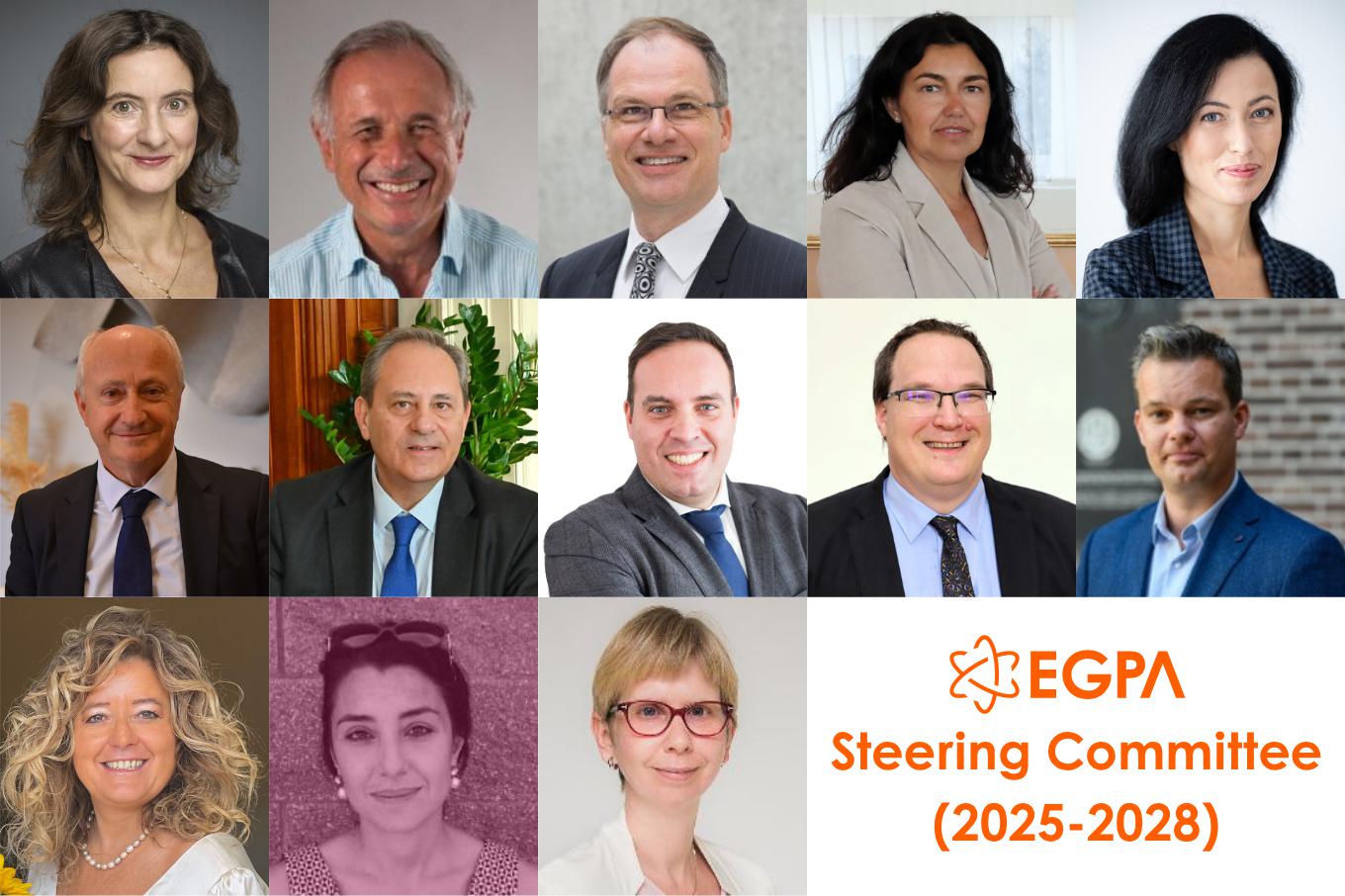
 EGPA Steering Committee (2025-2028) -
Link