Trans-European Dialogue 2027

EGPA Advances Its Renewal Agenda with 2026 Budget Approval

Diogo Pereira,

Staying true to EGPA’s commitment to transparency and close engagement with its community, a major milestone has been reached: for the first time, a dedicated €60,000 budget has been approved for EGPA projects in 2026. This funding will support initiatives such as travel grants for early-career researchers, seed funding for Study Group activities, the PhD Symposium, etc. This important step places EGPA firmly on the path toward greater financial autonomy and institutional self-determination. In the coming year, the Finance Task Force will further develop ways to consolidate these reforms in the financial relationship between EGPA and its parent organisation.

Our strategy to strengthen and revitalise study groups is well underway. By 20 December 2025, we had received an impressive 38 proposals for new study groups and panels from 24 countries. This strong response highlights the vibrancy, vitality, and productivity of the EGPA community - bringing together new voices alongside highly motivated senior and early-career researchers.

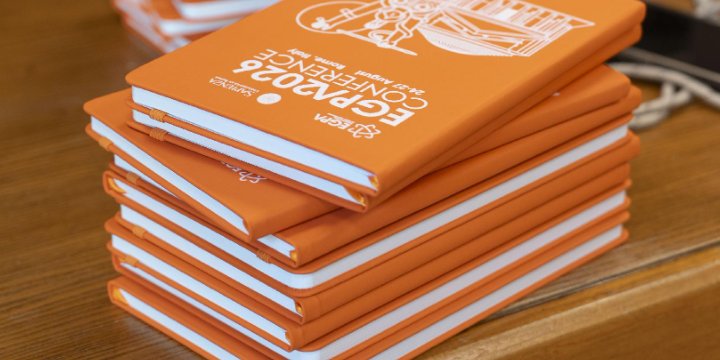
In 2026, EGPA will also deepen its international cooperation through the organisation of a Transatlantic Dialogue (TAD) in Rome, in partnership with ASPA, further reinforcing EGPA’s role in fostering global exchange in public administration. EGPA is also pleased to confirm that the President of the American Society for Public Administration (ASPA) will participate as a keynote speaker at the EGPA 2026 Conference in Rome.

At the organisational level, the recruitment process for a new EGPA Executive Secretary is progressing, with 39 promising candidates from across the world advancing to the interview stage in December.

In the coming weeks, EGPA will publish: 

  • the full Travel Grant Call (January 2026);
  • the EGPA Grant Call for PSGs, AHGs, and Standing Panels initiatives;
  • and the detailed calendar for the PhD Symposium.

Members and interested scholars are invited to follow updates via the EGPA page (link below). 

Resources

Public administration and management research has long drawn most of its ideas from Western, industrialised democracies. Yet Asia and the Global South have become major sites of administrative change, with large-scale reforms, fast-moving technology and some of the most inventive experiments in governance. Research from these regions has grown accordingly, but it is still often used to illustrate or apply theories made elsewhere, rather than to produce new ones.

This special issue of Public Management Review aims to change that. It invites authors to treat practice in Asia and the Global South as a starting point for theory: to test, question or extend established approaches, and to propose new concepts and explanations. It does not look for a single theory of these regions, which are far too diverse for that, but for context-sensitive contributions that also say something useful for policy and practice.
ASPA and EGPA call for papers | New Orleans, April 12-13, 2027 | Deadline: November 30, 2026

As democratic institutions face mounting pressure worldwide, public administrators are increasingly asked to spell out the role of their field in protecting and improving democratic systems. The American Society for Public Administration (ASPA) and the European Group for Public Administration (EGPA) are responding with the 2027 Transatlantic Dialogue (TAD), held alongside ASPA’s Annual Conference.

The theme is The Role of Public Policy and Administration in Shaping Democracy and Promoting the Resilience of Democratic Norms and Institutions.

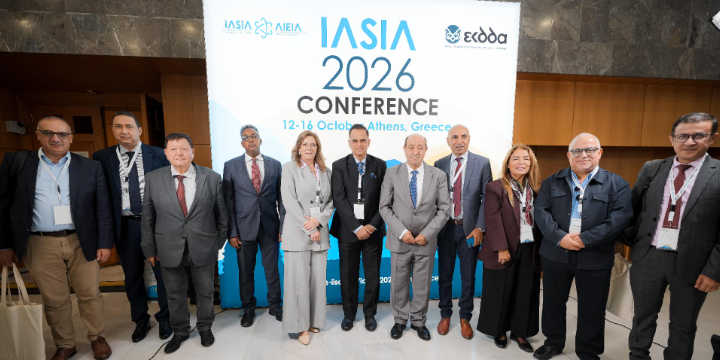
From 12 to 16 October 2026, the International Association of Schools and Institutes of Administration (IASIA) held its Annual Conference in Athens, hosted by EKDDA, the National Centre for Public Administration and Local Government. Under the theme “Rethinking Governance for a Changing World”, the conference gathered 400 delegates from 57 countries and marked the 65th anniversary of the association. Athens was a conference grounded by learning and history but also new projects and connexions.

Modify cookies