Trans-European Dialogue 2027

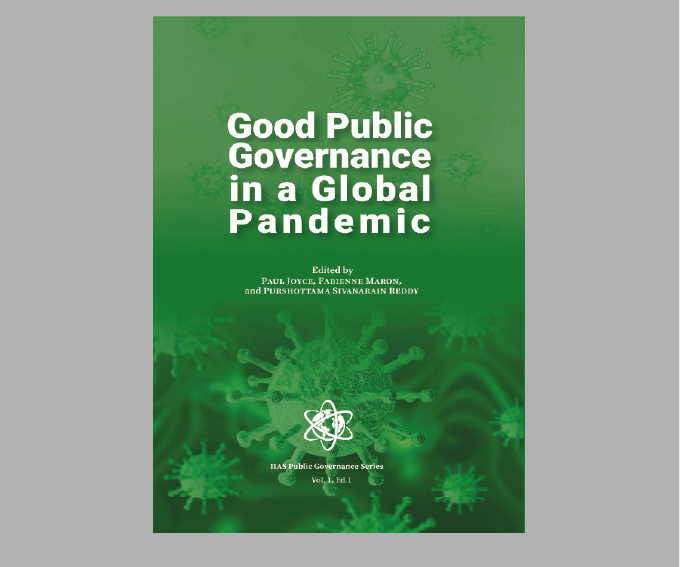
Good Public Governance in a Global Pandemic, IIAS new book on Covid-19 pandemic

This book provides the readers with a set of vivid studies of the variety of national approaches that were taken to responding to COVID-19 in the first few months of the pandemic.

At its core is a series of reports addressing the national responses to COVID-19 in Africa, Asia, Europe, North America, Latin America, and the Middle East and North Africa. Country reports present the actions, events and circumstances of governmental response and make an early attempt at producing insights and at distilling lessons. Eyewitness reports from civil servants and public managers contain practical points of view on the challenges of the coronavirus pandemic.

In different chapters, editors and contributors provide an analytical framework for the description and explanation of government measures and their consequences in a rich variety and diversity of national settings. They also situate the governmental responses to the pandemic in the context of the global governance agenda, stress the important relationship between governmental authorities and citizens, and emphasize the role of ideological factors in the government response to COVID-19. A bold attempt is made in the concluding chapter to model government strategies for managing the emergency of the pandemic and the consequences for trajectories of infection and mortality.

As the editors argue, the principles of "good governance" are of relevance to countries everywhere. There was evidence of them in action on the COVID-19 pandemic all over the world, in a wide range of institutional settings. COVID-19 experiences have a lot to teach us about the governance capabilities that will be needed when future emergency situations occur, emergencies that might be created by pandemics or climate change, or various other global risks. Governments will need to be agile, able to learn in real time, good at evaluating evidence in fast changing and complex situations, and good at facilitating coordination across the whole-of-government and in partnership with citizens and the private sector.

Public administration and management research has long drawn most of its ideas from Western, industrialised democracies. Yet Asia and the Global South have become major sites of administrative change, with large-scale reforms, fast-moving technology and some of the most inventive experiments in governance. Research from these regions has grown accordingly, but it is still often used to illustrate or apply theories made elsewhere, rather than to produce new ones.

This special issue of Public Management Review aims to change that. It invites authors to treat practice in Asia and the Global South as a starting point for theory: to test, question or extend established approaches, and to propose new concepts and explanations. It does not look for a single theory of these regions, which are far too diverse for that, but for context-sensitive contributions that also say something useful for policy and practice.

ASPA and EGPA call for papers | New Orleans, April 12-13, 2027 | Deadline: November 30, 2026

As democratic institutions face mounting pressure worldwide, public administrators are increasingly asked to spell out the role of their field in protecting and improving democratic systems. The American Society for Public Administration (ASPA) and the European Group for Public Administration (EGPA) are responding with the 2027 Transatlantic Dialogue (TAD), held alongside ASPA’s Annual Conference.

The theme is The Role of Public Policy and Administration in Shaping Democracy and Promoting the Resilience of Democratic Norms and Institutions.

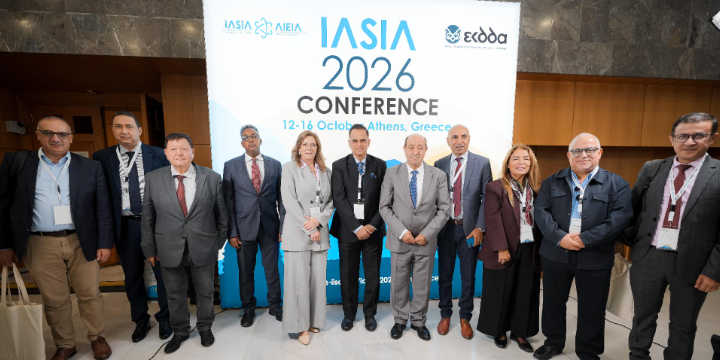
From 12 to 16 October 2026, the International Association of Schools and Institutes of Administration (IASIA) held its Annual Conference in Athens, hosted by EKDDA, the National Centre for Public Administration and Local Government. Under the theme “Rethinking Governance for a Changing World”, the conference gathered 400 delegates from 57 countries and marked the 65th anniversary of the association. Athens was a conference grounded by learning and history but also new projects and connexions.

Modify cookies