At the 25th session of the United Nations Committee of Experts on Public Administration, the International Institute of Administrative Sciences (IIAS) and the International Association of Schools and Institutes of Administration (IASIA) reaffirmed their commitment to strengthening public governance systems that are both inclusive and grounded in administrative reality.
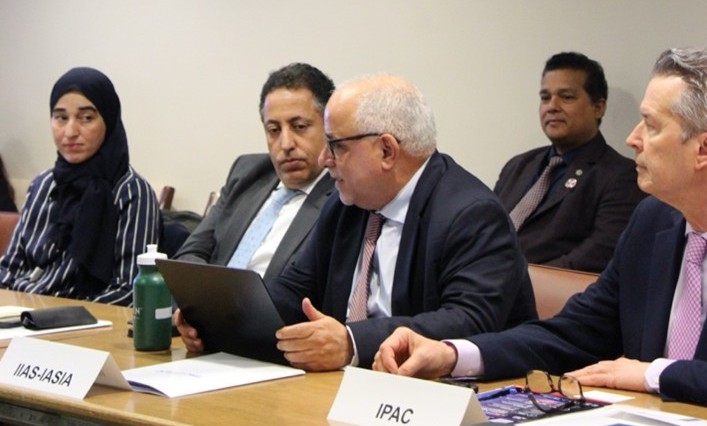
Under Theme 8 “Building institutions to promote peaceful and inclusive societies, with a focus on women, youth, and those in vulnerable situations”, IIAS Director General Dr. Sofiane Sahraoui delivered a timely and substantive intervention. Drawing on the conference room paper prepared by CEPA members, he commended its comparative institutional perspective and strong gender-responsive approach. At the same time, he offered a critical reflection on the politics of implementation, warning against the risks of transferring decontextualized institutional models across different national settings, including widely cited frameworks such as the German dual education system. The intervention underscored the need to move frominstitutional design to administrative reality, a core concern of the IIAS community.
This perspective was further reinforced during the interactive consultation with observers (Item 10), where IASIA President Dr. Liezel Lues delivered a compelling online intervention reinforcing the importance of bridging global frameworks with local administrative practice.
Her remarks underscored the central role of political will in translating global commitments into tangible progress:
“Political will is the catalyst that transforms commitments into action. It ensures that anti-corruption frameworks are not merely symbolic but enforced; that access to justice is not aspirational but accessible; and that the inclusion of women, youth, and vulnerable groups is not merely rhetorical but institutionalised.”
Together, these contributions reflect a shared message from the IIAS community: while global frameworks such as Sustainable Development Goal 16 provide a solid foundation, their success ultimately depends on how they are implemented within diverse administrative contexts. Bridging the gap between international norms and local realities remains essential to building institutions that are not only effective, but genuinely inclusive and resilient.

 Remarks by IASIA President Dr. Liezel Lues | 25th UN CEPA Session -
Link
Remarks by IASIA President Dr. Liezel Lues | 25th UN CEPA Session -
Link