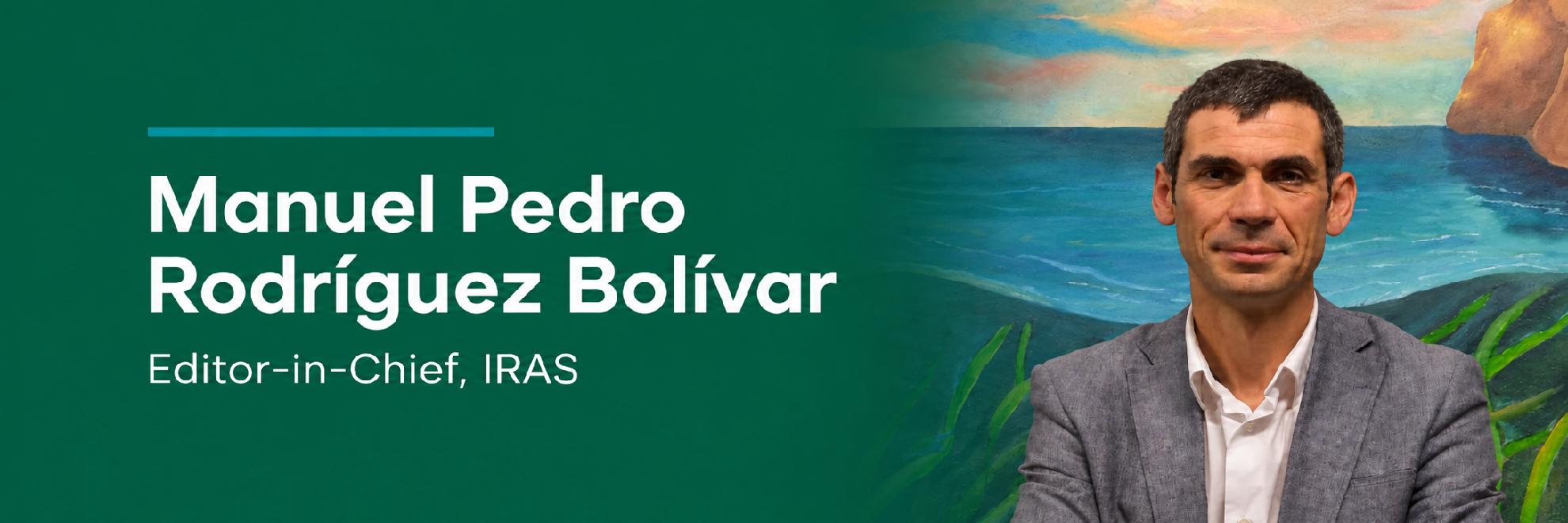
Professor Manuel Pedro Rodríguez Bolívar, Editor-in-Chief of the International Review of Administrative Sciences (IRAS), is included in the latest Stanford–Elsevier database of the world’s top-cited scientists, recognising the sustained citation impact of his research in political science and public administration.
Affiliated with the Universidad de Granada, Rodríguez Bolívar is included for the seventh consecutive year in the annual assessment, covering 2019–2025, and for the fourth consecutive year among the top 2% of scientists for career-long impact, covering 2022–2025. Published in October 2026, the latest update draws on Scopus citation data through 2025 and uses standardized indicators that account for co-authorship and authorship positions.
Reflecting on the recognition, he highlighted the collective contribution behind scientific work and the responsibility that accompanies its influence:
“I am deeply honoured by this recognition among the world’s top-cited scientists. It is not merely a personal milestone, but a collective affirmation of the enduring value of rigorous, comparative public administration scholarship in an era of complex, interconnected governance challenges. Being included in such rankings underscores the responsibility that scholars and journals share: to produce knowledge that is both theoretically robust and practically actionable.”
His research connects digital government and urban studies, examining questions relevant to how public institutions respond to technological and social change. These concerns also inform his perspective on the contribution of public administration scholarship to government decisions, from evaluating institutional reforms to improving transparency and citizen-centred services.
“Public administration research plays a pivotal role in supporting evidence-informed decision-making and enabling governments to serve society more effectively. High-quality comparative and international research illuminates what works, under which conditions, and for whom.”
For Rodríguez Bolívar, comparative research helps governments understand how approaches perform across different contexts and what their implementation requires. By examining institutional arrangements and reform experiences through rigorous methods, researchers can provide insights that support more effective resource allocation, stronger accountability and responses adapted to societal needs.
As the flagship journal of IIAS, IRAS provides an international forum for connecting this knowledge with practice across countries and administrative traditions. Rodríguez Bolívar emphasised the journal’s role in addressing emerging challenges, including artificial intelligence, institutional resilience and sustainability, while maintaining scientific quality and practical relevance.
“By prioritizing theoretically informed empirical work, systematic reviews, and contributions that explicitly engage the interface between research and practice, IRAS functions as a critical knowledge broker: it curates, contextualizes, and disseminates findings that can inform evidence-informed decisions and help governments better serve society.”
The recognition highlights the scholarly experience Rodríguez Bolívar brings to the editorial leadership of IRAS. His commitment to connecting rigorous research with the needs of public institutions also aligns with the mission of IIAS to advance the study and practice of public administration through international collaboration and knowledge exchange.
“This recognition therefore reinforces my commitment, as Editor-in-Chief, to ensuring that IRAS remains a vibrant platform where rigorous comparative research meets the practical imperatives of contemporary public governance.”
IIAS congratulates Professor Rodríguez Bolívar on this recognition and his continuing contribution to public administration research and the scientific leadership of IRAS.ita