The International Association of Schools and Institutes of Administration (IASIA) informs all interested participants that the extended deadline for submitting abstracts or panel proposals is rapidly approaching. Submissions for the IASIA 2025 Conference will be accepted only until June 30, 2025.


The EGPA 2025 Conference, to be hosted by the University of Glasgow’s Centre forPublic Policy from 26 to 29 August,is shaping up to be the most dynamic andwell-attended edition of the EuropeanGroup for Public Administration’s annual event.


Volume 91, Issue 2 (June 2025) of the International Review of Administrative Sciences (IRAS) is now available. This issue brings together a diverse set of contributions examining urgent topics in public administration, from administrative burden and smart cities to performance-based budgeting and the politics of compliance in the digital age.


In this exclusive interview, newly elected IIAS President Voruganti Srinivas outlines his vision, priorities, and plans to shape the Institute as a future-ready, inclusive, and globally connected institution.


The International Instituteof Administrative Sciences (IIAS) is proud to announce the election of ShriSrinivas Voruganti, Secretary of the Department of Administrative Reforms andPublic Grievances (DARPG) of the Republic of India, as its next President forthe term 2025–2028.


The International Institute of Administrative Sciences (IIAS) is pleased to announce the release of  Digital Transformation in European Public Services:Complexities, Challenges, and Good Practices, edited by Nicolae Urs, David Špaček, and Steven Nõmmik. This insightful volume explores the evolving landscape of digital innovation within European public administrations, offering a comprehensive examination of management practices that either enable or hinder digital transformation across different government levels.


After an extensive two-year global review process, the United Nations Department of Economic and Social Affairs (UN DESA) and the International Association of Schools and Institutes of Administration (IASIA) have finalized and launched the updated Standards of Excellence for Public Administration Education and Training.


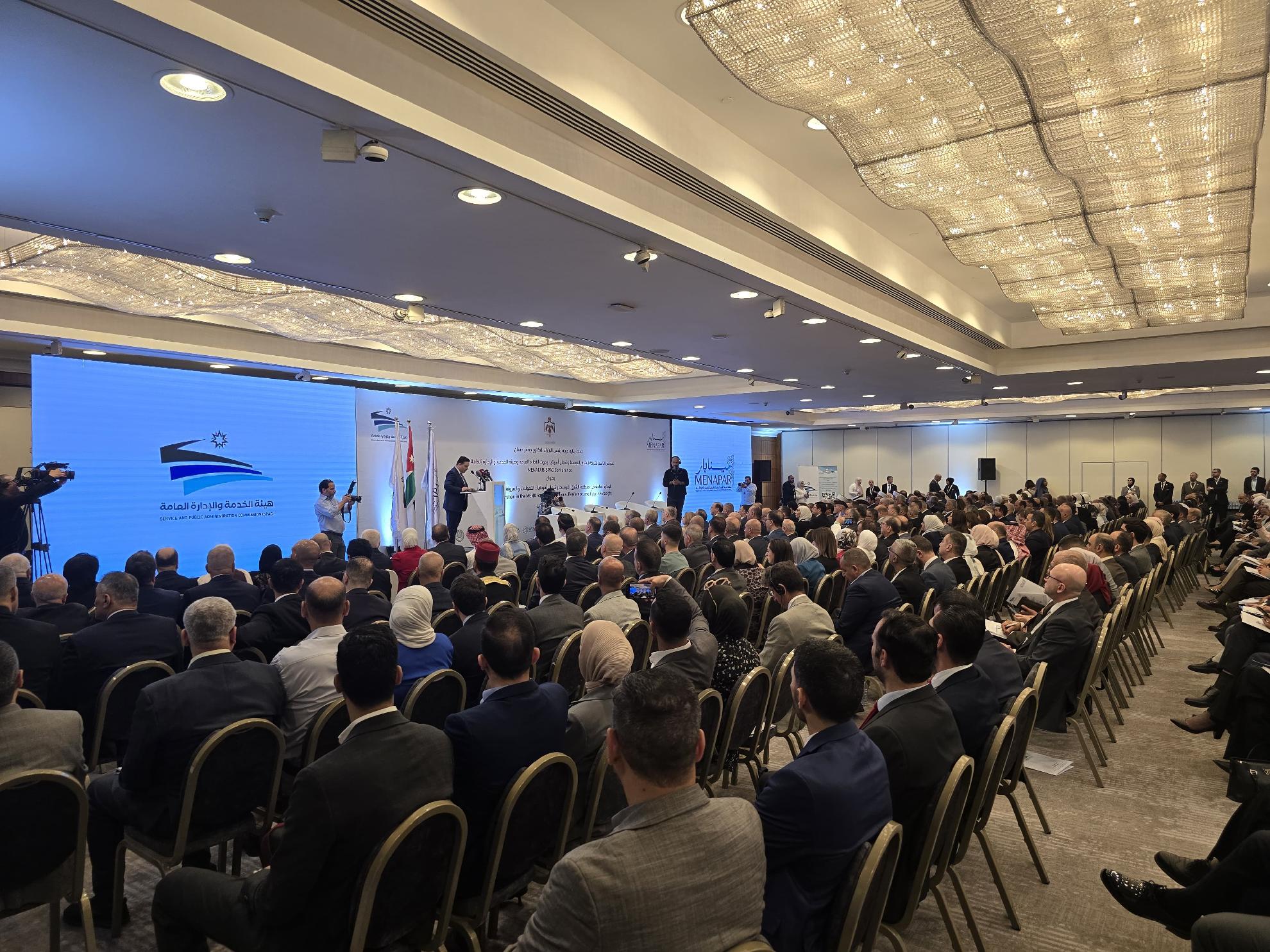
The MENAPAR 2025 Conference, held in Amman, Jordan, from April 28 to 30, brought together leading regional and international stakeholders to exchange knowledge and foster collaboration in the field of public administration. Under the theme “Public Administration in the MENA Region: Transitions, Resilience, and Future Prospects,” the event provided a dynamic platform for high-level dialogue on innovation, institutional transformation, and governance reform in a rapidly evolving global landscape.


The International Association of Schools and Institutes of Administration (IASIA) is pleased to announce that submissions in Spanish will be accepted for selected tracks of its 2025 Annual Conference, to be held in Mexico City from October 13 to 17, 2025, in partnership with the National Institute of Public Administration (INAP) of Mexico.


The International Institute of Administrative Sciences (IIAS) actively participated in the 24th session of the United Nations Committee of Experts on Public Administration (CEPA), held in New York from 7 to 11 April 2025. This year’s session was centered on the theme "Governance and institutional perspectives on advancing sustainable, inclusive, science and evidence-based solutions for the SDGs."


The International Institute of Administrative Sciences (IIAS) has entered a decisive phase in the selection of its next President for the 2025–2028 term. In February, the IIAS Council of Administration convened to conduct hearings with the shortlisted candidates. Following thoughtful deliberation and discussion, the Council has resolved to forward three distinguished candidates to the General Assembly for election:


The International Institute of Administrative Sciences (IIAS) is pleased to announce the publication of the latest issue of Developments in Administration (DinA). This issue features three original research articles that delve into fiscal, institutional, and human resource dimensions of public sector transformation across Brazil, Indonesia, and Vietnam.

1. The Brazilian Public Spending Cap and the Impacts of the COVID-19 PandemicBy Gerson Sicca, Leonardo Secchi, and João CatarinoThis paper applies the Advocacy Coalition Framework to examine how Brazil’s fiscal policy coalitions navigated the unprecedented shock of the COVID-19 pandemic. Despite the crisis, findings suggest stability in policy core beliefs, offering ...


Modify cookies